Health
Robert F. Kennedy Jr. praises regenerative ag efforts at North Dakota event
By Lila Johnson
Advertisement · Why this ad?
Ravi Patel has a background in economics and journalism, graduated from the University of North Dakota. With four years of experience at local news outlets, he specializes in business trends and economic development in the Grand Forks area.
More from Ravi →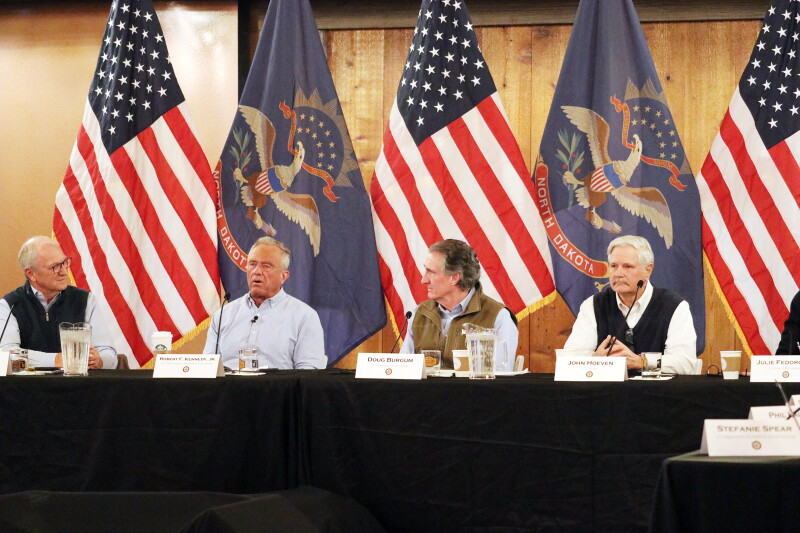
Under the expansive North Dakota sky, where the prairie meets the horizon, a small but powerful gathering took place at Black Leg Ranch—an event that could mark a turning point for America's heartland. As families like Jerry Doan’s have farmed these lands for generations, the whispers of a new agricultural revolution grew louder, promising hope for soil, water, and community resilience. Yet, amid the hopeful speeches and high-level endorsements, questions linger about transparency, community trust, and the true direction of this movement.
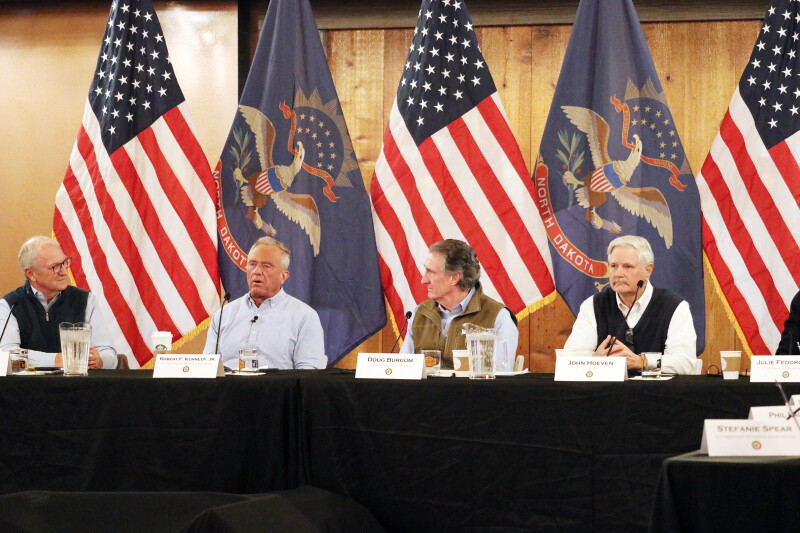
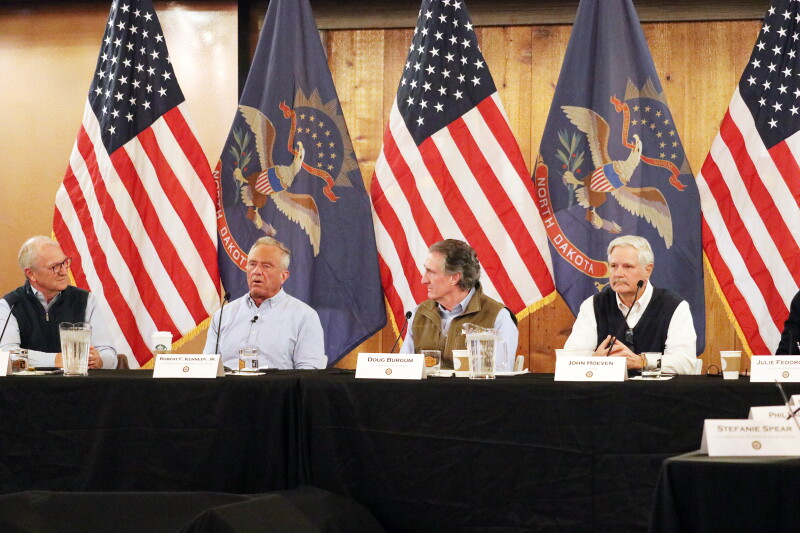
On a crisp Thursday morning, North Dakota’s leading political figures and federal officials gathered at the historic Black Leg Ranch, a symbol of resilience and tradition. The event, organized by Senator Kevin Cramer's office, focused on regenerative agriculture—a set of practices aimed at restoring soil health, boosting biodiversity, and improving water quality. The star of the show was Robert F. Kennedy Jr., who praised regenerative efforts as vital to restoring American health and the land that sustains us. Kennedy’s words resonated with many, especially given his reputation as an environmental advocate and his emphasis on soil health as a foundation for human well-being.
Jerry Doan, whose family homesteaded the ranch in the 1880s, shared his journey from hardship during the 1980s Farm Crisis to becoming an advocate of adaptive rotational grazing. His story exemplifies how innovative land management practices can breathe new life into aging farms, making them more profitable and sustainable. Doan highlighted the importance of soil and water conservation, citing specific measures like fencing out creeks to prevent erosion and planting 25 species of cover crops to enrich the soil. His message was clear: doing things differently isn’t just good for the environment—it’s good for business and families.
While the event was packed with high-profile speakers, a shadow of controversy cast over the proceedings. The North Dakota Department of Health and Human Services directed most media to leave after Kennedy’s remarks, raising questions about transparency. Only a few reporters, including those from Agweek, remained to cover the story, witnessing firsthand the tension between public interest and official control. This media blackout sparked concern among local farmers and community leaders, who worry that such secrecy could undermine trust in the very initiatives meant to benefit them.
Local farmers like Sarah Jensen, who operates a diversified farm near Fargo, expressed cautious optimism. “We want to see real results, not just promises,” she said. “If these practices can improve our soil and water, that’s great, but we need openness and accountability.” Many in the community see regenerative agriculture as more than a trend; it’s a pathway to preserving their land, their families, and their way of life. The question remains whether government and industry leaders will genuinely prioritize community voices or if this is merely a show for political optics.
The momentum from the Black Leg Ranch event signals a broader shift in North Dakota’s agricultural landscape. State officials like Governor Doug Burgum and Senator John Hoeven highlighted federal and state programs designed to incentivize soil health initiatives, including the USDA’s upcoming $1 billion Regenerative Pilot Program. These investments aim to expand conservation practices across the state, encouraging farmers to adopt sustainable methods that could secure the land’s future for generations to come. Yet, critics warn that without transparent implementation and community engagement, these programs risk becoming top-down mandates rather than collaborative efforts.
Looking ahead, the conversation around regenerative agriculture in North Dakota is poised to grow. Advocates aim to build on the momentum, emphasizing education, incentives, and local leadership. Organizations like the North Dakota State University Extension Service are already offering resources to help farmers transition to regenerative practices, emphasizing that soil health is a cornerstone of resilient farms and healthy families. As the community grapples with these changes, the hope remains that genuine faith in the land and a commitment to families will guide the way forward, ensuring that progress benefits all, not just a few.
In the end, the story of Black Leg Ranch and North Dakota’s broader agricultural future is still being written. Will the community’s trust be restored through transparency and shared success? Or will the promise of regenerative agriculture remain just that—a promise? One thing is certain: the resilience of North Dakota’s families and their unwavering faith in the land’s promise will be the true measure of this new chapter.
Black Leg Ranch is more than just a piece of land; it is a living testament to North Dakota’s pioneering spirit. Established in the late 19th century by homesteaders like the Doan family, it embodies the resilience and adaptability that has allowed generations to thrive despite economic downturns, droughts, and changing markets. The ranch's name, derived from the black Angus cattle introduced by Jerry Doan’s grandfather, reflects a long-standing tradition of livestock excellence in the region.
Many local residents see Black Leg Ranch as a symbol of community identity. It’s a place where stories of hardship, innovation, and perseverance are passed down through generations. The ranch’s history is intertwined with North Dakota’s broader narrative of settlement, agriculture, and the ongoing quest to balance economic viability with environmental stewardship.
Jerry Doan is more than a rancher; he’s a community leader and advocate for sustainable agriculture. His commitment to soil health and water conservation stems from decades of firsthand experience managing the land. Doan’s efforts have garnered respect from local farmers and environmental groups alike, positioning him as a bridge between traditional ranching and modern regenerative practices.
Robert F. Kennedy Jr., known nationally for his environmental activism, has been increasingly involved in promoting soil health as a key to combating climate change and improving public health. His presence at the North Dakota event underscores a growing recognition that local actions on farms can have far-reaching impacts on national health and environmental policies.
North Dakota’s rural communities are deeply connected to the land. For many farmers and ranchers, adopting regenerative practices is not just an environmental choice but a matter of economic survival. The challenges of weather variability, market pressures, and aging infrastructure make the pursuit of sustainable methods both urgent and complex.
Local leaders and organizations are working to ensure that the benefits of these initiatives reach all farmers, especially those in marginalized or economically vulnerable areas. Education programs, grants, and technical assistance are critical components of this effort, aiming to democratize access to regenerative techniques.
As the state moves forward, community dialogues will be essential. Building trust through transparency, listening to farmers’ concerns, and sharing success stories will determine whether regenerative agriculture becomes a community-driven movement or remains a top-down policy initiative. The future of North Dakota’s land, water, and families depends on this delicate balance.
Following the Black Leg Ranch event, stakeholders are calling for increased transparency and community engagement. Local organizations are advocating for more inclusive discussions, where farmers and residents can voice their concerns and contribute to shaping policies that affect their land and livelihoods. The North Dakota Farm Bureau and local conservation groups are planning workshops and field days to demonstrate regenerative practices and share success stories from early adopters.
On the legislative front, efforts are underway to ensure that upcoming farm bills and federal programs incorporate community feedback and equitable access. Senators Hoeven and Cramer have pledged to push for policies that support small and medium-sized farms, emphasizing that sustainable practices must be accessible and practical for all farmers, regardless of size or resources.
As North Dakota continues to embrace regenerative agriculture, the community remains vigilant. The true test will be whether these initiatives lead to tangible improvements in soil and water quality, economic stability, and community trust. The resilience and dedication of North Dakota’s farmers and ranchers will be the guiding force in this ongoing journey toward a sustainable future.
By Lila Johnson

By Lillian Becker
By Emily Chang

By David Ortiz