
Arts
Weather gallery for November 4, 2026
By Clara Jensen
Advertisement · Why this ad?
Erik Svenson is a passionate arts journalist with over five years of experience in cultural reporting. He graduated from Minnesota State University and has worked for various arts publications in the region, highlighting local artists and events.
More from Erik →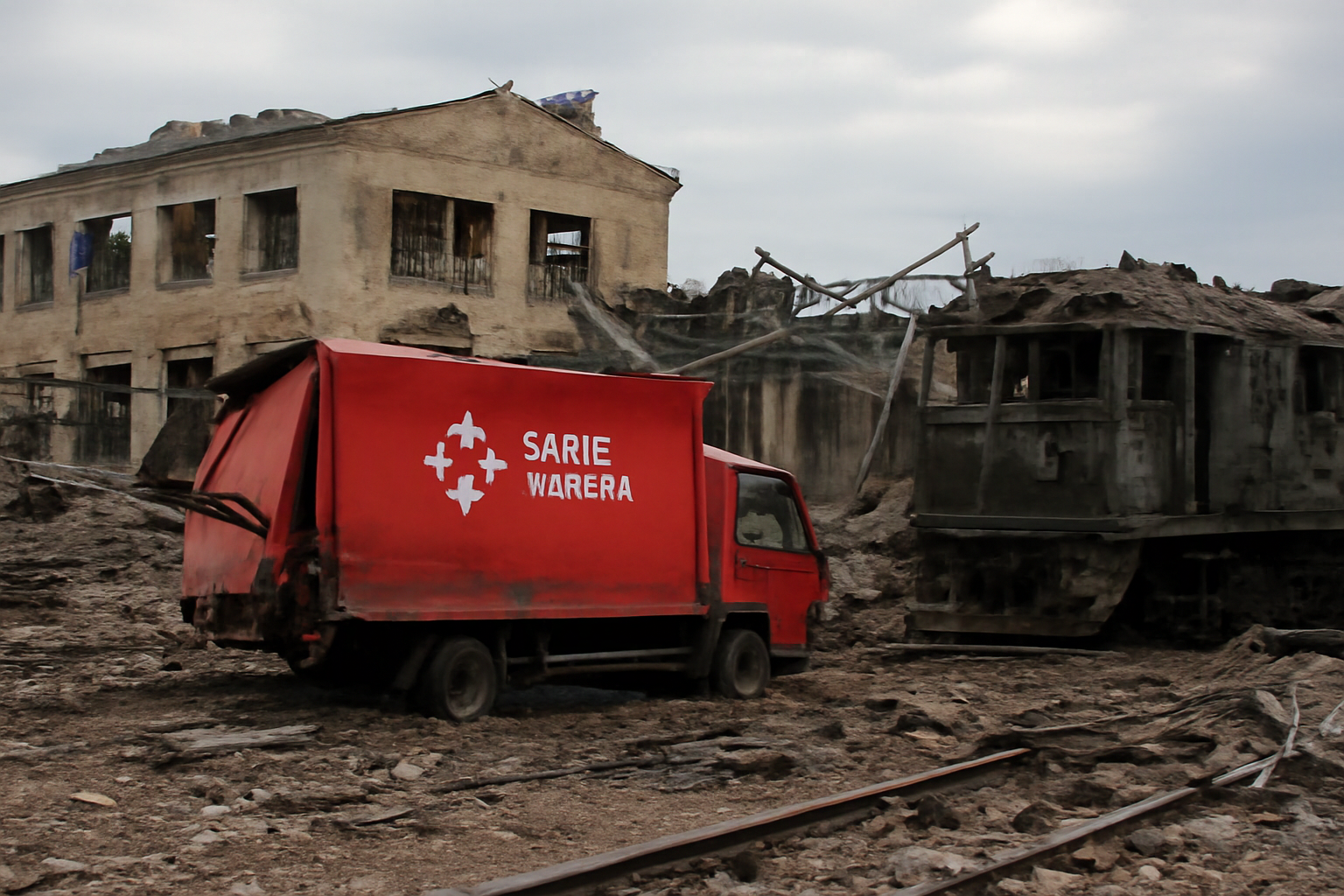
In the quiet moments before dawn, as the first light of day begins to creep over the horizon, the sound of distant explosions reverberates through the air, shattering the stillness. This was the reality for many in Ukraine on the night of November 5, as the Russian military announced a series of strikes targeting logistics and transportation hubs across the war-torn nation. The echoes of conflict remind us of the ongoing struggle that has gripped this region for far too long.
In a statement released by the Russian military, officials claimed that they successfully hit multiple logistics and transport targets in Ukraine overnight, a move they assert is part of their ongoing military operations. Among the reported strikes was a significant attack on a Nova Poshta logistics hub in the Kharkiv region, a facility allegedly used by Ukrainian forces for assembling drones. The assault did not stop there; railway locomotives and an industrial building at the Thermal Power Plant 2 were also targeted.
Further south, in the Dnipropetrovsk region, a power station became the focus of another strike, illustrating the breadth of the Russian military's campaign. Additionally, a cargo vessel was reportedly attacked at sea, approximately 52 kilometers southwest of the Black Sea port of Odesa. This multifaceted approach to warfare underscores the ongoing intensity of the conflict and the strategic importance of logistics in modern warfare.
While the Russian Defense Ministry claims these actions are necessary for their military objectives, the reality on the ground is far more complex. The humanitarian impact of such strikes cannot be overstated, as civilian infrastructure is often caught in the crossfire of military engagements.
The response from the Ukrainian populace has been one of resilience mixed with despair. Many families are left to grapple with the aftermath of these strikes, their lives forever altered by the conflict. Local community leaders have voiced their concerns, stressing the importance of solidarity and support for those affected. UNICEF and other humanitarian organizations are working tirelessly to provide aid and assistance to those in need.
In the heart of Kharkiv, local resident Maria Ivanova shared her experience of the night’s events. “We heard the explosions and felt the ground shake,” she recounted, her voice trembling as she spoke. “It’s hard to believe that our city has become a battlefield.” Her words echo the sentiments of many who find themselves living in a state of constant fear and uncertainty.
As the community rallies together, support networks are forming to assist those who have lost their homes or livelihoods. Local churches and organizations are stepping up, offering shelter, food, and emotional support to those in distress. The spirit of unity is palpable, a testament to the strength of the human spirit even in the darkest of times.
Community leaders have also taken to social media to express their solidarity and call for action. Mayor Ihor Terekhov of Kharkiv emphasized the need for increased security measures and urged citizens to remain vigilant. “We will not be broken by these attacks,” he stated in a press conference, rallying the community to stand strong against the threats they face. His words resonate deeply as residents seek a semblance of normalcy amidst the chaos.
The ongoing conflict between Russia and Ukraine, which escalated dramatically in 2022, has transformed the landscape of Eastern Europe. With each passing day, the impacts of war stretch further into the lives of ordinary citizens, disrupting families and dismantling communities. The strikes on logistics and transport hubs highlight the strategic importance of these facilities in warfare, as they are essential for the movement of troops and supplies.
In Kharkiv, a city that has faced relentless bombardment, the effects of war are visible in the damaged buildings and the somber faces of its residents. Local businesses struggle to operate, with many forced to close their doors permanently due to the ongoing violence. The once-bustling streets are now marked by uncertainty, as shop owners and families navigate the precarious situation.
As the world watches, the situation remains fluid. Reports from the battlefield are often difficult to verify, leaving many to rely on official statements and news outlets. The implications of these military actions extend beyond immediate damage; they threaten to destabilize the region further and prolong the suffering of countless individuals.
The humanitarian crisis in Ukraine continues to deepen as the conflict persists. According to World Food Programme, millions of Ukrainians face food insecurity due to the disruptions caused by the war. Access to basic necessities, including food, clean water, and medical supplies, has become increasingly precarious.
Organizations like the Ukrainian Red Cross are working around the clock to provide relief, but the scale of need far outstrips available resources. Families are struggling to stay together, often forced to make heartbreaking choices about their safety and well-being.
In the Kharkiv region, local hospitals are overwhelmed with patients suffering from both physical injuries and mental health crises. Psychologists report a significant rise in cases of PTSD and anxiety among children who have been exposed to the violence. Community support systems are vital in helping individuals cope with the psychological scars left by the conflict.
As the situation unfolds, the international community watches closely, with many calling for a renewed focus on diplomatic solutions. The need for dialogue and negotiation has never been more pressing, as the ongoing violence only serves to deepen divisions and prolong suffering.
In the meantime, local communities continue to adapt and respond to the challenges they face. Initiatives aimed at rebuilding and recovery are underway, with an emphasis on fostering resilience and hope. Local leaders are advocating for support from both national and international entities, recognizing that the path to recovery will require collaboration and commitment.
As winter approaches, the urgency of addressing the humanitarian crisis grows. With temperatures dropping, the need for adequate shelter and warmth becomes critical. Community organizations are mobilizing to provide assistance, ensuring that no one is left behind during this difficult season.
Looking forward, many in Kharkiv are hopeful for peace, yet they remain realistic about the challenges ahead. Community forums are being organized to discuss recovery strategies, allowing residents to voice their concerns and suggestions. The indomitable spirit of the Ukrainian people shines through, as their resilience and determination to rebuild their lives and communities serve as a beacon of hope amidst the darkness of war.