
Health
Trach removal part of Matthew Donovan's continued recovery
By Jessica Rourke
Advertisement · Why this ad?
David Ortiz brings a unique perspective as a former educator turned journalist, holding a degree from North Dakota State University. With three years of experience, he aims to foster dialogue on educational policies affecting local schools.
More from David →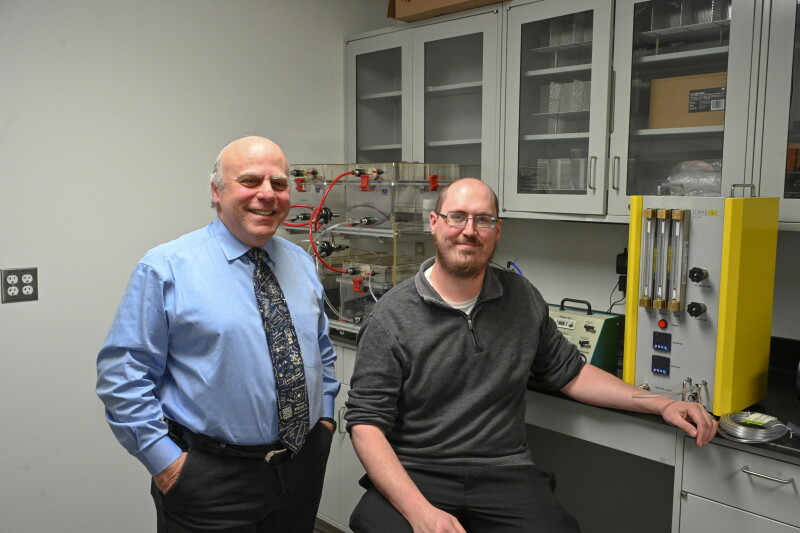
In the heart of Grand Forks, a quiet revolution is taking place at the University of North Dakota School of Medicine and Health Sciences (SMHS). Picture a bustling lab where researchers are deep in discussion, surrounded by state-of-the-art equipment. Here, the future of healthcare is being shaped through innovative studies that promise to change lives. Dean Marjorie Jenkins passionately states, "Research saves lives," emphasizing that the healthcare and prescriptions patients receive today are rooted in the discoveries made within these walls.
At SMHS, research is not just an academic exercise; it is a lifeline for many. This year, faculty members have published groundbreaking studies that span diverse topics, including the impacts of radon exposure, advancements in treatments for retinal dystrophy, and the potential of cell-free DNA in breast cancer diagnostics. Each study represents a collaboration that reaches across the globe, showcasing the school's commitment to improving health outcomes for all.
One significant study led by Gary Schwartz and Mark Williamson focuses on the correlation between ovarian cancer and radon exposure. Utilizing data from the Women’s Health Initiative, which tracked over 127,000 women for 31 years, the research highlights alarming findings: women living in areas with high radon levels face a significantly increased risk of developing ovarian cancer. Williamson notes, "We don’t know anything about what causes ovarian cancer. Almost nothing." This research not only raises awareness but also suggests actionable steps for prevention, such as testing and remediating homes for radon.
Another fascinating study involves Keith Henry from the Department of Biomedical Sciences, who is exploring the effects of taurine supplementation in children suffering from early-onset retinal dystrophy. Collaborating with Stylianos Antonarakis from the University of Geneva, Henry's research provides hope for families grappling with vision loss. Through dietary changes, the researchers observed improvements in the children's retinal health, showcasing a potential pathway to mitigate the effects of genetic disorders.
The implications of these studies extend far beyond the lab. For families in Grand Forks and surrounding areas, the research conducted at SMHS represents hope and tangible solutions. The findings on radon exposure could lead to increased awareness and preventive measures, potentially saving lives. Williamson emphasizes the need for community engagement, stating, "If radon really was a risk factor, that's fairly modifiable. You can test your house, if you have high radon you can get it remediated." This proactive approach empowers residents to take charge of their health.
For parents of children with retinal dystrophy, Henry's research is a beacon of hope. The collaboration with international experts not only enhances the scientific community but also fosters a sense of local pride. It illustrates how Grand Forks is contributing to global health advancements. As Henry reflects on the journey of the two children in Pakistan, he notes, "It’s fair to say that someone that has taurine malfunction in the eye, that same transporter is being used elsewhere in the body in those organs and would also be malfunctioning, so there can be comorbidities." This insight underscores the interconnectedness of health, reinforcing the importance of comprehensive care.
Another remarkable study at SMHS is led by Motoki Takaku, who investigates the potential of cell-free DNA as a diagnostic tool for breast cancer. By analyzing DNA from over 70 patient samples, Takaku and his team are uncovering patterns that could revolutionize how doctors approach treatment. He shares, "One of the most exciting parts... suggests that doctors may be able to predict drug efficacy or sensitivity even before treatment." This groundbreaking work not only enhances the precision of cancer treatment but also holds the promise of significant cost savings for patients.
The ability to predict how a patient will respond to treatment before it begins is a game-changer. It aligns perfectly with the values of the Grand Forks community, where families cherish the importance of health and well-being. Takaku's research exemplifies a commitment to improving health outcomes, reinforcing the belief that informed decisions can lead to better lives.
The SMHS building itself is a testament to the university's dedication to research. With state-of-the-art labs and facilities, the school is equipped to lead from North Dakota. Dean Marjorie Jenkins notes, "We can lead from North Dakota," emphasizing the school's ambition to be at the forefront of medical research. This commitment is not only about producing research but also about fostering an environment where collaboration thrives.
Looking ahead, the potential for further research at SMHS is vast. With ongoing studies and new partnerships forming regularly, the school is poised to make significant contributions to medical science. The community can expect continued advancements in health research that will directly impact their lives. Jenkins envisions a future where the discoveries made today will translate into real-world applications, improving health outcomes for generations to come.
In addition to groundbreaking research, the SMHS actively engages with the Grand Forks community through educational programs and outreach initiatives. The school frequently hosts workshops and seminars aimed at raising awareness about health risks, including radon exposure and cancer prevention. These events provide valuable resources and knowledge to local residents, empowering them to make informed health decisions.
Moreover, the SMHS collaborates with local schools and organizations to promote health education among youth. By fostering an understanding of health sciences from an early age, the school is nurturing the next generation of researchers and healthcare professionals. This commitment to community involvement not only strengthens local health but also creates a pipeline of talent that can contribute to future research endeavors.
The research being conducted at the University of North Dakota School of Medicine and Health Sciences is not just about academic achievements; it is about real lives, families, and communities. The studies on radon exposure, retinal dystrophy, and breast cancer diagnostics are paving the way for a healthier future. As Dean Jenkins encapsulates, "Research saves lives," and the work being done at SMHS is a powerful testament to that truth.
For the residents of Grand Forks, the implications of this research are profound. It highlights the importance of community engagement in health matters and the need for proactive measures to address health risks. As families continue to navigate the complexities of health and wellness, the research at SMHS stands as a beacon of hope, illuminating the path toward a healthier tomorrow.
By Jessica Rourke

By Ravi Patel
By Lydia Smallwood

By Amina El-Amin